SedCatch
937-435-5075     
Manufacturer of Sediment Control Devices & Inlet Protection


Dewatering Bags / Tubes™ / Socks

Dewatering Bags / Tubes / Socks

Sizes

Dewatering Sock
10" dia x 5' SedCatch 10" x 5' Dewatering Sock;
reusable, rope included

$22.25

Quantity:
Dewatering Tube™
1.5' x 15' SedCatch 1' 6" x 15' Dewatering Tube;
reusable, rope included for both ends

$31.95

Quantity:
 
3' x 15' SedCatch 3' x 15' Dewatering Tube;
reusable, rope included for both ends

$47.25

Quantity:
  
Dewatering Bag
6' x 6' SedCatch 6' x 6' dewatering bag;
rope included
$46.68
Quantity:
7' 6" x 10' SedCatch 7' 6" x 10' dewatering bag;
rope included

$83.52

Quantity:
 
7' 6" x 15' SedCatch 7' 6" x 15' Dewatering Bag;
rope included

$96.60

Quantity:
 
7' 6" x 20' SedCatch 7' 6" x 20' Dewatering Bag
rope included

$107.25

Quantity:
 
15' x 15' SedCatch 15' x 15' Dewatering Bag;
rope included

$138.08

Quantity:
 
15' x 30' SedCatch 15' x 30' Dewatering Bag;
rope included

$278.00

Quantity:
 
15' x 60' SedCatch 15' x 60' Dewatering Bag;
rope included

$410.40

Quantity:
 
15' x 100' SedCatch 15' x 100' Dewatering Bag;
rope included

$617.00

Quantity:
 
Custom sizes are available on request and are comparably priced.


Choosing the proper dewatering bag

  • GPM (gallons per minute) into the bag. Every pump that is sold gives the gpm of the pump at various head (the vertical distance) pressures. While the design flow of the bag is in excess of 100 GPM per sq ft when new, the best (longest lasting, most economical) sustainable flow rate is between 10 – 20 gpm. If your job has larger sediment particles the sustainable flow rates will be on the higher side, if the sediment has an excess of smaller particles (which will plug the filter faster) then your number will be on the lower side.
  • Oil Absorbancy. The purpose of a dewatering bag is to collect sediment contained in the water that is being pumped, to prevent scour and erosion from water exiting a pipe at high velocity, to defuse the water over a wider area, minimizing erosion as the water drains away, and to retain oil and hydrocarbons contained within effluent. Use to comply with 40 CFR 122.6 and National Pollutant Discharge Elimination System (NPDES) regulations. The 8 oz. Dewatering bag has the ability to absorb .37 gallons per sq. yd. of material at low flow rates. The 10 oz. Dewatering bag has the ability to absorb .46 gallons per sq. yd. of material at low flow rates.
  • Volume of Sediment Collected. Depending upon the amount of sediment that is expected to be collected, the larger sizes will be more economical than several smaller bags, subject to disposal methods.
  • Disposal. The bags are impossible to move when full. If it is not feasible to cut open the bag and scatter the sediment where it lies, the most cost effective bag size will often be based upon disposal methods. We manufacture the 7’6” wide series because many of our customers place the bag on a  spare equipment trailer or truck so they can transport the bag to a location, either onsite or offsite, before removing the contents.

SedCatch® Dewatering Bags

Dewatering BagsDewatering BagsDewatering Bags

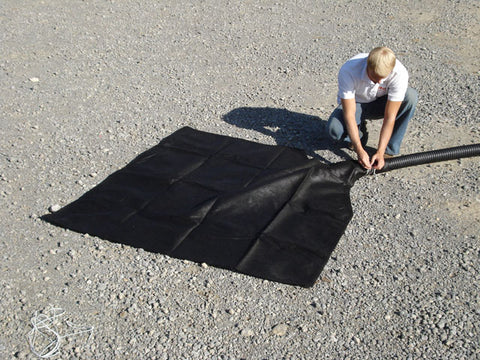
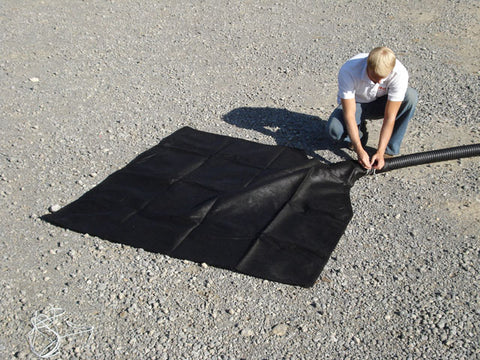
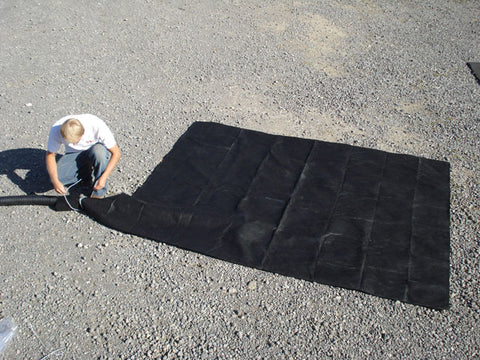
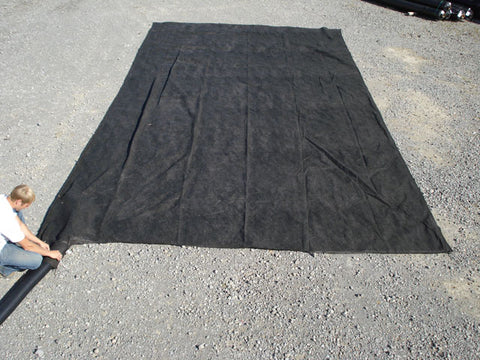
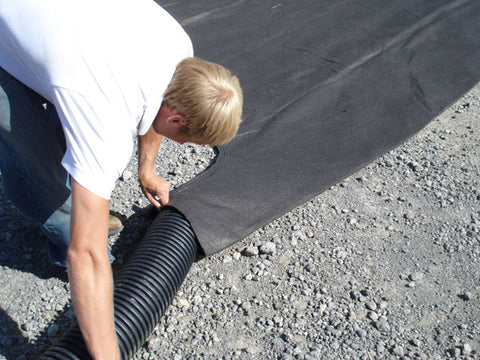
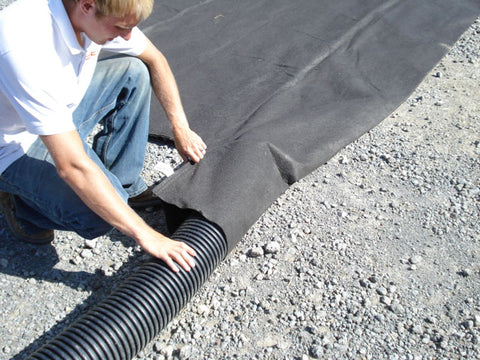
All of our dewatering bags are made with a snout to make the connection with the discharge hose easier and more secure.  A length of rope is included with each bag.


A SedCatch® Dewatering Bag is the most economical for larger accumulations of sediment.

xxx

The larger sediment bags will hold 50 to 200 times the sediment of the smaller tubes. Use the largest bag you can still dump efficiently.  Learn more . . .

SedCatch® Dewatering Tubes™  (Re-usable)


A SedCatch® Dewatering Tube™ is the most economical choice for smaller accumulations of sediment. The patent pending design allows sediment to be emptied from both ends, with no corners to prevent complete removal of sediment. If it collects much more than 2” of sediment consider it a single use product.  Learn more . . .

xxx
xxx

Remove the sediment from the Sediment Tube™ each time you relocate the pump. Purchase a size that is large enough to handle the sediment you expect to collect before the need to relocate. If a sediment tube has to be emptied several times during the same pumping operation, a larger Sediment Tube™ or Dewatering Bag would be more economical.

xxx
xxx
xxx

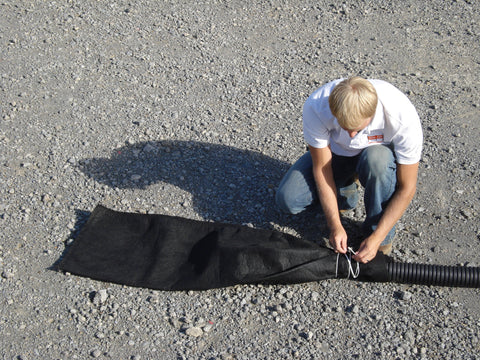
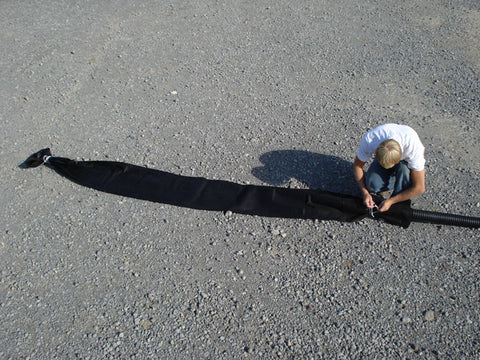
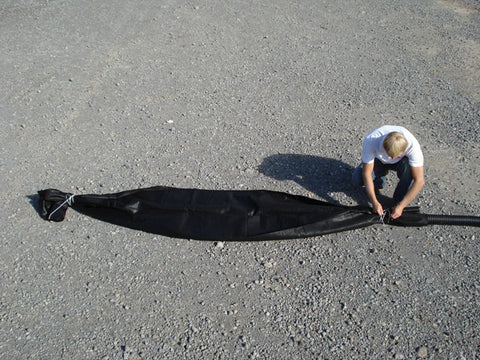
Insert the discharge pipe a minimum of 5ft inside the tube and secure with a rope (included) wrapped 6 times. IMPORTANT To close the open end, overlap the tube 2ft from the end. Gather the center of the doubled-up portion forming a bow tie. Secure with a rope (included) wrapped multiple times.

SedCatch Dewatering Socks

A SedCatch® Dewatering Sock works great on smaller pumps. We sell them in packs of 5. Add $10.00 for a split package fee.

Standard Drawings & Specifications

SedCatch Dewatering Bag Standard Drawing Dewatering Bag/Tube Standard Drawing SedCatch Dewatering Bag/Tube Geotextile SpecificationsSedCatch Dewatering Bag/Tube Item Specification
SedCatch Dewatering Bag/Tube Geo Textile Specification - 10oz SedCatch Dewatering Bag/Tube Item Specification - 10 oz. .doc SedCatch Dewatering Bag/Tube Item Specification - 10 oz. .pdf SedCatch Dewatering Bag/Tube Geo Textile Specification - 10oz docx file

FAQ for SedCatch® Dewatering Bags/Tubes ™

Should I put straw under dewatering bags to increase flow rates?
Don’t bother; it will only help in the initial flow rate. Once the bag has accumulated a ¼” layer of sediment along the bottom it will be impervious anyway, and no longer have any effect.

Why are dewatering bags needed?

The purpose of a dewatering bag or dewatering tube is to:

  • Collect sediment that is contained in the water that is being pumped
  • Prevent scour and erosion from water exiting a pipe at high velocity
  • Diffuse the water over a wider area to minimize erosion as the water drains away
  • Retain oil contained within effluent.